Showing 1–12 of 22 results

  • The Eternal Light: From Dawn to Starlight

    Guest Conductor: Franz Herzog (Austria)
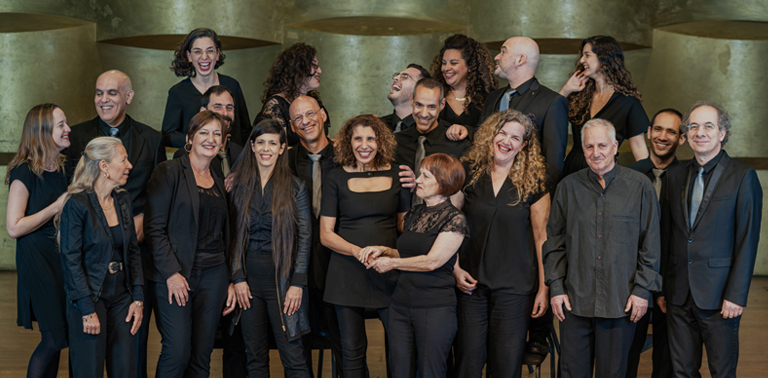
    The Israeli Vocal Ensemble
    Saxophone: Eyal Isaac

    Lived recorded at the Tel Aviv Museum of Art, 28/2/2017

    Program

    Dawn
    Sunrise – The birth of a new day, of human being 

    Robert White (1538-1574)
    Christe, qui lux es et dies

    György Ligeti (1923-2006)
    Reggel (Morning)

    Ola Gjeilo (b. 1978)
    O magnum mysterium – Serenity

    A New Day
    We will sing a hymn to the creator of the light
    Jesus, the light, the new day –
    My love is like a new day...

    Franz M. Herzog (b. 1962)
    Missa Lux caelestis

    Kyrie
    Gloria

    Daylight
    In the middle of our life we sometimes need help
    “Send us your light”

    Felix Mendelssohn-Bartholdy (1809-1847)
    Psalm 43, "Richte mich Gott" (Op. 78 No.2)

    Franz M. Herzog
    Canticle of the Sun –
    No.5, "Laudato si, mi Signore"

    Edvard Grieg (1843-1907)
    Ave Maris Stella

    Traditional
    Amazing Grace (arranged by Zvi Sherf)

    Sunset
    Evening comes – End of our lives – Peace

    Heinrich Schütz (1585-1672)
    Musikalische Exequien –
    Herr, nun lässest du deinen Diener

    Morten Lauridsen (b. 1943)
    O nata lux

    Josef Gabriel Rheinberger (1839-1901)
    Abendlied

    Ēriks Ešenvalds (b. 1977)
    Stars

  • On Romanticism in Music

    The 19th century is the golden age of choral music. The human voice expresses the major values of the Romantic period – the emphasis on human personality and its moods, the emotional expression, and understanding nature as a mirror of the soul. Many choirs arose and choral singing gradually took center stage in both the composers' works and on the stages. At this lecture, associated with the second concert of the Vocal Experience Series, conductor Yuval Benozer discusses romantic music and what makes it so. He plays music by Schubert, Rossini, and Brahms, and brings a taste of one of the most exciting choral works of the 20th century: "Peace on Earth", by Arnold Schoenberg.

  • Virtual hall 2021 subscription

    The virtual hall subscription gives one-person access to the ivocal.co.il website for the coming season, including watching live the five concerts of the 2021 Vocal Experience series, as well as full access to past concerts, lectures and podcasts.

    Once the payment has been processed, buyers will receive access information in a separate message.

    Contact us at 074-7012112 and on WhatsApp at the same number wa.me/972747012112

  • G.F. Handel: The Oratorio Judas Maccabaeus

    Conductor: Yuval Benozer
    The Israeli Vocal Ensemble
    The Jerusalem Symphony Orchestra
    Soloists: Daniela Skorka, soprano; Alon Harari, Alt; Ron Silberstein, tenor; Oded Reich, bass; Narrator: Alon Neuman

    Duration of the concert: 01:27:50 hours

    Lived recorded at the Tel Aviv Museum of Art, 2/1/20

    The Oratorio Judas Maccabaeus is made up of three parts:

    The first part opens with a description of the death of Matityahu and the mourning of the people for the death of its leader (a typical and beautiful eulogy choir section). His son Shimon encourages the faith of the people and calls on them to take up arms, while his brother Judah accepts the role of leader and encourages his people with reflections on freedom and victory in the power of faith in God. 

    In the second part of the oratorio, the Israelites win. But when they learn that the Seleucid commander Gorgias is preparing his army for revenge, the rejoicing of the people turns into despair (Ah! Wretched Israel) and Judah again inspires a spirit of warfare and heroism in the people and demands the destruction of the altars of infidels and resistance to the false religion (with the most famous aria Sound an Alarm).


    In the third and final part, the Jews win and are received in a solemn parade, and the people celebrate the arrival of the long-awaited peace in one of the beautiful duets Oh Lovely Peace.

  • Francis Poulenc : Figure Humaine

    Text: Paul Eluard

    Conductor: Yuval Benozer Assistant Conductor: Guy Pelc

    The Israeli Vocal Ensemble performs for the first time in Israel the cantata Figure Humaine, composed by Francis Poulenc in 1942, for texts by the French poet Paul Eluard, during the Nazi occupation. The work is considered by many to be the pinnacle of Poulenc's work, if not one of the best works written in the 20th century.

    Duration of work: 17:49 minutes

    The piece was performed as part of the "Sounds of Freedom" concert that took place at the Tel Aviv Museum, 15/6/2019

    Figure Humaine:

    I –De tous les printemps du monde

    II –En chantant les servantes s’élancent

    III –Aussi bas que le silence

    IV –Toi ma patience 

    V –Riant du ciel et des planets

    VI –Le jour m’étonne et la nuit me fait peur

    VII –La menace sous le ciel rouge

    VIII –Liberté

  • J.S. Bach / The Well-Tempered Clavier

    Conductor: Yuval Benozer  

    Piano: Ofra Yitzhaki 
    The Israeli Vocal Ensemble
    Tel Aviv Saxophone Trio:
    Gan Lev soprano saxophone, Ziv Slama alto saxophone, Maayan James baritone saxophone

    Duration of Concert: 01:11:08 hours

    Live recorded at the Tel Aviv Museum, 23/7/20 

    Program: 

    The Well-Tempered Clavier
    by J.S. Bach

    Prelude & Fugue No. 1 in C major

    Prelude & Fugue No. 2 in C minor

    Prelude & Fugue No. 3  in C Sharp major (Arrangement for Saxophones: Ziv Slama)

    Prelude & Fugue No. 4 in C sharp  minor

    Prelude & Fugue No. 5 in D major 

    Prelude  No. 6 in D minor from WTC book 2 & Fugue No. 6 in D minor from the Art of Fugue

    Prelude & Fugue No. 8 in E flat minor (Arrangement for Saxophones: Nadav Ben Ozer)

    Prelude & Fugue No. 10 in E minor  (Arrangement for Saxophones: Nadav Ben Ozer)

    Prelude & fugue No. 12 in F minor  from WTC book 2

    Prelude & fugue No. 16 in G minor

    Prelude & fugue No. 18 in G sharp minor from WTC book 2
    (Arrangement for Saxophones: Ziv Slama)

    Prelude & fugue No. 17 in A flat major 

    Prelude & Fugue No. 22 in B flat minor 

    Prelude No. 24  in B minor from WTC book 2 & fugue No. 24 in B minor  from WTC book 2

  • J.S. Bach: St. John Passion – the pinnacle of ecclesiastical drama

    The two passions of J.S. Bach are considered by many to be the pinnacle of Western religious music of all time. In the fifth lecture in the "Magic Behind the Voices" series, conductor Yuval Benozer explains the elements that breathe life into the archaic text and turn it into a moving experience. Lecture will touch upon the Passion text, the Gospels, the unique role of the Evangelist - the narrator, the three roles of the choir, the place of the choral in the story and more.

  • The Celtic Voices

    Conductor: Yuval Benozer
    The Israeli Vocal Ensemble
    Evergreen Band: Michal Shachar, flutes, piano, melodica, voice; Moshe Avigdor, guitar; Gal Shachar, violin; Abe Doron, percussion

    Duration of Concert: 1:14:49 hours

    Live recorded at the Tel Aviv Museum, 15/5/2017

    Program:

    Ocarolan’s Dream
    Music: Turlough O'Carolan


    Free and Easy

    Lyrics & Music: Shaun Davey

    Down by the Salley Gardens  

    Lyrics: Y.B Yeats

    Music: Herbert Hughes


    Scarborough Fair

    traditional English
    Arr. Carsten Gerlitz

    Soloists: Tom Ben Ishai, Taliya Dishon, soprano


    Clohinne Winds

    Lyrics & Music: Briege Murphy

    Soloists: Michal Shachar voices: Avivit Hochstadter, Tamar Ben Ozer


    The Miller’s Maggot
    Traditional Jig

    Early One Morning

    Traditional English; Arr. Jeremy Jackman

    Singers: Taliya Dishon, Era Givoni, Daniel Portnoy, Oded Amir, Ronen Ravid


    Loch Lomond

    Traditional Scottish
    Arr.: David Overton

    Soloist: Daniel Portnoy, baritone


    You Brought me up
    Lyrics: Louis de Paor
    Music: John Spillane
    Soloist: Michal Shachar


    Mo Ghille Mear
    Traditional Irish Gaelic
    Soloist: Ori Batchko, tenor


    She’s got fire


    Siúil A Rúin (Go my love!)

    Traditional Irish
    Soloist: Nava Sahar, soprano


    The Shore of Botany Bay
    Traditional Irish
    Arr. Carsten Gerlitz


    Danny Boy

    Traditional Irish
    Arr. Jonatahn Rathbone


    The Old Ways
    Lyrics and Music: Loreena McKennitt
    Soloist: Michal Shachar

    Phil The Fluter’s Ball
    Lyrics: Percy French
    Music: Delany’s Donkey by William Hargreaves

    It’s Complicated to Be simple

    The Ballad of Yoel Moshe Salomon
    Lyrics: Yoram Tahar Lev
    Music: Shalom Hanoch

  • J.S. Bach’s Motets

    What’s a Motet? Who were the composers who inspired Bach? Why are the six Motets composed by Bach considered the pinnacle of his choral work? Yuval Benozer will talk about the close connection between text and music, and about how out of structural complexity, we get music that speaks to all ears in its own simple language.

  • Requiem without a Requiem

    What’s the relation between the German Requiem--Johannes Brahms’ beautiful work--and the Requiem genre? There is not a single word in Brahm’s work from the Latin requiem text. Are Henry Purcell's Funeral Sentences less exciting due to the fact that the texts he chose for them are not from the requiem? Such is the case with Cantata 106 by J.S. Bach "God’s time is the very best time."
    Listeners are invited on a journey through a collection of beautiful works written to part from those who have passed away. Works of music that bring comfort and fill the heart.

  • The Great Requiems – Mozart, Verdi, Brahms and Fauré

    Following the previous lecture, which dealt with the Catholic Mass over the years, this time we will touch upon the Requiem. What is the relation between the Requiem and the Mass and what sets them apart? What is the origin of the Requiem’s text? Was it written for the dead or for the living? Is it meant to scare or comfort? What makes the great and famous requiem exciting? What makes Fauré’s Requiem unique? Is Brahms' German Requiem really a Requiem?

  • The Great Masses

    What’s a Mass in music? What is its liturgical context? What are the six movements of the Mass and the different nature of each one? Why did composers write (and still do write) music for the text of the Mass? This lecture is a trip back in time to the different movements and perspectives of composers throughout history — Palestrina, William Bird, J. S. Bach, Vivaldi, Mozart, Schubert, and Puccini — on the central Christian prayer text.

Showing 1–12 of 22 results